Showing posts with label Ross Golf Agronomy. Show all posts

Sunday, October 25, 2020

TurfNet TV - Latest Video is Live...

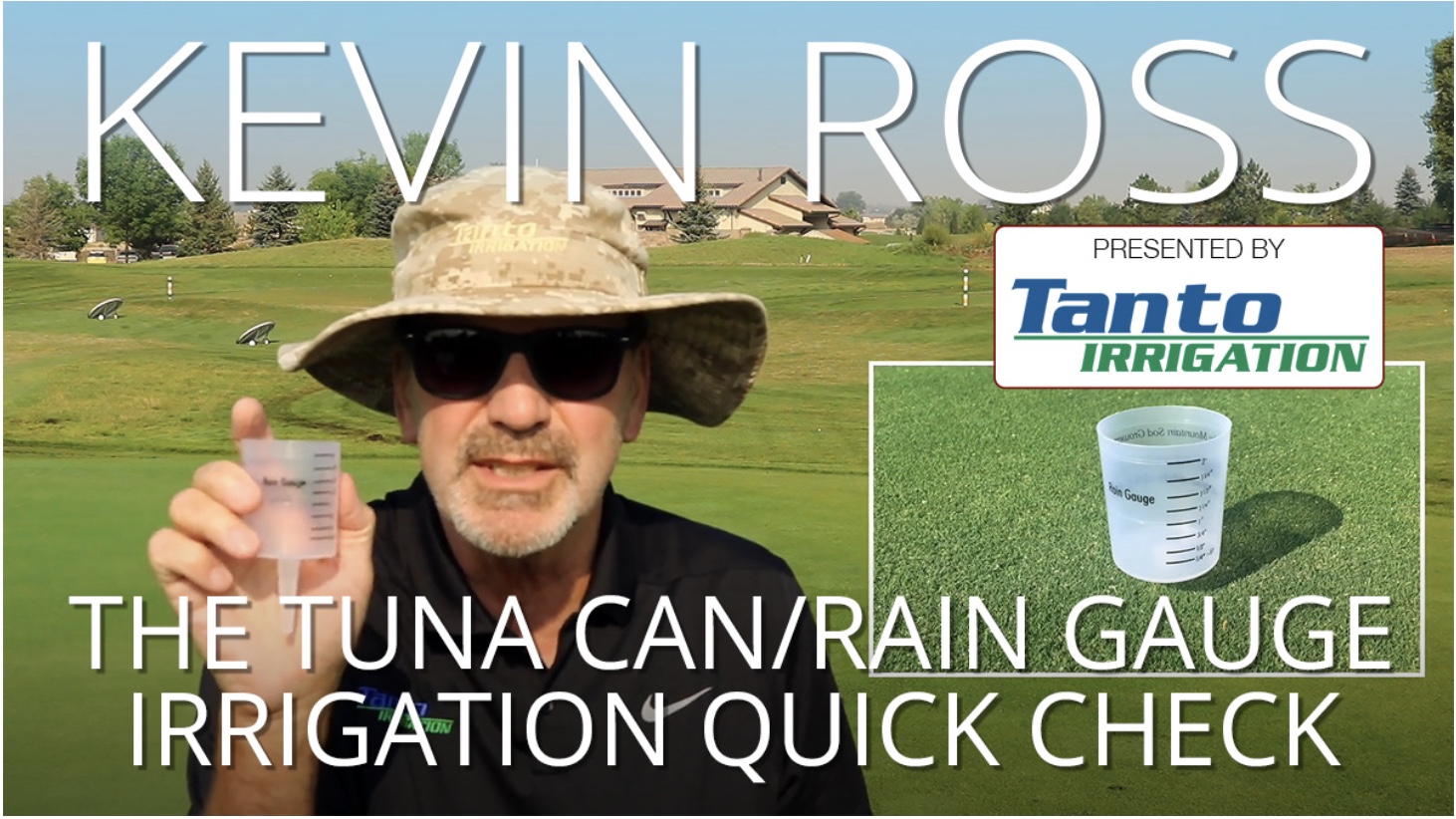
In my latest ONCOURSETurf video production for TurfNet.com I discuss how to perform an irrigation quick check. This is a very easy and effective method for quickly determining problems with sprinkler heads. It also can give a general idea of precipitation rate accuracy. VIEW HERE As always, thanks to my supporting sponsor www.tantoirrigation.com and thanks for watching! 


Monday, March 23, 2020

TurfNet TV - Latest Video is Live...

In my latest ONCOURSETurf video production for TurfNet.com I discuss having a tour of your maintenance facility operation for club committees and even an open house for your membership. These tours always leave an amazing impression on your members. Don't ever be afraid to...showcase your operation. Take a look HERE As always, thanks to my supporting sponsor www.tantoirrigation.com and thanks for watching!


Saturday, February 15, 2020

TurfNet TV - Latest Video is Live...

In my latest ONCOURSETurf video production for TurfNet.com I discuss a sod holding and grow technique I developed while I was a superintendent in the high mountains of Colorado. This technique allows sod to root and establish at incredibly fast rates. Take a look HERE As always, thanks to my supporting sponsor www.tantoirrigation.com and thanks for watching!


Thursday, December 19, 2019

TurfNet TV - Latest Video is Live...

In my latest ONCOURSETurf video production for TurfNet.com I discuss cart path curbing. A few years back, I was involved with a complete cart path construction project and I decided to do an interesting thing when it came to curbing selection. I never really liked the "standard 4-inch curb", so I discussed a smaller curb with our contractor, DHR Golf Construction, and they informed me of a project at the Olympic Club in San Francisco, where they used 2" curb. I must admit, I loved the thought of that. So, when I wrote the specs for the project, I decided to use 2" curbing in many areas throughout the course. It was a big success! To view this video, please click HERE As always, thanks to my supporting sponsor www.tantoirrigation.com and thanks for watching.


Monday, December 17, 2018

TurfNetTV - Latest Video is Live....

My latest ON COURSE video for TurfNet.com is live. In this video I chat with Matt Gourlay, CGCS - superintendent at Colbert Hills Golf Course in Manhattan, KS. We discuss his "More is Less" philosphy about turfgrass management. Matt also gives us some insight about what it meant to be named TurfNet Superintendent of the Year back in 2015. Please click HERE to view. As always, thanks to my supporting sponsor Tanto Irrigation


Sunday, December 2, 2018

Vole Control on the Golf Course

There is no debating the fact that one of the biggest issues for superintendents in the mountain west are those little pesky voles. Voles are rodents and a relative of the mouse. There are over 100 species of voles. The meadow vole is responsible for the bulk of the damage in a turfgrass situation. Voles are herbivores and the majority of their diet consists of grass stems and leaves. In the summertime voles migrate to thick taller grassy/native areas for protection against predators. However, when snowfall arrives they have protection under snow cover and this is the time they migrate to fine turf areas and can cause damage. This makes golf course turfgrass very susceptible to damage during wintertime period. Voles cause turf damage by chewing grass plants extremely low to the ground. They chew so low they cause damage to the crown of the plant. Voles also create runways in the winter, first by chewing the plants, then by using these to forage for additional food each day. These runways can see extensive traffic throughout the winter as voles forage each day on 10-15 trips through these runways.


Vole Damage in a fairway situation with no Milorganite applied. 
Generally speaking, voles don’t directly kill the turf plant. Although if they damage the crown of the plant extensively, it is possible. The main issue with vole damage is the slow recovery of the turf in the spring. With the combination of cold soil temperatures and damaged turf plants in the spring, recovery can be extremely slow. The other issue with vole damage is its effect on playability. When a golf ball lands in one of the vole tunnels it can nestle down and make for a very poor lie. So until complete recovery occurs playability suffers.


Vole Damage to Kentucky Bluegrass tee surrounds. The tee surface received
 an application of Milorganite and sand topdressing and is not touched!

Controlling voles is extremely difficult if not impossible. Over the year’s superintendents have tried many different products with minimal success. One product I found which shows some vole repellency is Milorganite fertilizer. I discovered this primarily by accident. I have used Milorganite fertilizer for many years as a dormant feed on greens, tees, and fairways. What I didn’t realize was all those years of apply Milorganite, I was also repelling voles in those areas. 


All the years we applied Milorganite to the fairways we were getting
a side benefit of vole control, which we really discovered in 2014.
This came to light during the winter of 2014-15. That fall we had early snow cover and only finished 11 fairways with our Milorganite application. That spring we had extensive vole damage on fairways that didn’t receive the Milorganite application. We also noticed that spring that late season topdressing applications also reduced vole damage. With this in mind, we decided to apply Milorganite to the rough as well in the fall of 2015. We also set-up some small test areas with check plots to test our theory.

Some testing I performed in some grassy hollows which every year suffers
from vole damage. No Milorganite applied on the left and 0.75#N/M applied
to the right. Totally clean from any damage with the Milorganite.
In the spring of 2016 we were amazed at almost the complete lack of vole damage on the property. Our test plots also show without question that Milorganite certainly repels vole activity. We used a rate of 0.75#/N/M in all the rough and in our test areas. The results were fantastic. With this in mind, ONCOURSETurf, LLC set-up some independent testing in the fall of 2017 at some other local golf facilities, Sonnenalp Club and Red Sky Ranch. All test plots were 25 square feet and received a rate of one pound of nitrogen per 1000 square feet. Plots were established in areas of consistent vole damage each spring. Most areas were north facing, which allowed prolonged snow cover. In mid-April this past spring after snowmelt, I was able to observe the results from those test plots. The past winter season was a low pressure vole year, meaning the voles were not as active as other years. The main reason for this was the lack of snowfall and the lack of duration of what snow was received. With voles primarily active under snowcover. No snow cover equals no voles. There was some snow cover however and we did see some positive results with the Milorganite use. The rate used for the test plots was 1#/N/M. Take a look at some of my findings below.


Voles active in the area, but the Milorganite plot stayed clean from any damage.

In this test plot we had heavy vole damage on two sides, but the plot was generally clean.
The arrow shows vole entry into the plot from the right side, but it appears there was
repellency as very minimal damage occurred.
  
Another observation from the test plots was spring green-up. At the time of the test plot observations, soil temperatures were in the high 30's. In the photos below you can already see some spring green up occurring even with these extremely cold soil temperatures.


Initial spring green-up noticed immediately after snowmelt with soil temperatures in the high 30's.

Although it wasn't a high pressure vole year, there were certainly some indications that Milorganite can be effective for vole repellency. Presently, I am in the process of establishing some new testing on some of Colorado's front range courses to study this repellency further. Stay tuned.
Special thanks to Milorganite and WinField United for their support in establishing these test plots. 

To summarize, Milorganite certainly shows some control for vole damage. This fertilizer is a great option for a dormant fertility program with getting additional side effects of vole repellency. Getting two things accomplished with one product, that is a big plus! To read the benefits of Milorganite as a dormant fertility product click HERE

Wednesday, June 20, 2018

Kevin....Where have you been??

I've had many inquiries of where have I been lately? The blog has been somewhat dormant and I apologize for that. I have been in the process of relocation. I have sold my house in Eagle, Colorado and have moved temporarily to Fort Collins, Colorado. I have been traveling and will continue to do so until I find the right place to land. I plan on traveling through Wyoming, Montana, Idaho, Utah, Colorado, Minnesota, and Wisconsin. That's a pretty big list of states, but I'm in no hurry.

I will continue my working relationship with TurfNet, WinField, and Milorganite. I will also continue to work as an agronomist, consulting with golf courses. Being able to work remotely is one of the best things I have experienced, and basically I can live anywhere. 

So now as the dust settles on my move I hope to rekindle the blog and be more active. Sorry for the inactively, but stay tuned and thanks for your support!

Friday, April 20, 2018

TurfNetTV - Latest Video is Live.....

My latest ON COURSE video is live on TurfNet.com In this video I show how to make simple irrigation sprinkler head drive assembly pullers. I invented these pullers many years ago and they were always a big help for myself and staff. Take a look at the video HERE

I would also like to welcome my new video series sponsor, Tanto Irrigation. I've work with this irrigation installation company first hand and their work is second to none. If you're planning an irrigation system, they are a great choice for the install. Feel free to contact me personally if you need more information. Check them out at TANTO IRRIGATION

As always, thank you for the support of my video work and happy viewing!


Saturday, April 14, 2018

Video Archives on TurfNetTV.......

Regularly, I get asked about what happens to my ON COURSE videos at TurfNet.com once they leave the homepage? TurfNet does a great job by keeping them organized and available to view in an archive section. You can view my videos along with others such as Hector's Shop, Randy Wilson, etc. by going to the archive section. To check out the archives, go to the homepage at TurfNet.com and follow the instructional photos below. Thank you for viewing and supporting my video work!


Once on the TurfNet.com homepage, go to the menu at the top of
the page and select TurfNetTV.


From the drop down menu, select ON COURSE with Kevin Ross.


You will now be on the TurfNetTV ON COURSE with Kevin Ross archive page.
Enjoy and thanks for watching.

Saturday, December 2, 2017

Sunrises and Sunsets...Colorado Style!

There certainly have been some great sunrises and sunsets over the past couple months. The Colorado high country offers some spectacular photos opportunities of these. Here are a few of my favorite photos of late....enjoy!


Wednesday, October 25, 2017

Special Trip to Bandon Dunes

Recently, I had the opportunity to visit Bandon Dunes to be part of the WinField "Lunch and Learn" educational team. All I can say is, "what a great experience"! Really fell in love with this property! We started the day with our educational seminar for the Bandon staff. Myself, Dr. Doug Soldat, University of Wisconsin, Gary Grigg, Grigg, and Rob Garcia, Winfield United all spoke on various golf course management topics. Roger Henderson, WinField United local sales representative, put on the event and did a wonderful job. It's the first time I have ever been in a conference room that used a wireless signal from my laptop to the projector. Who knows, maybe the days of all those cables will be over soon. It was a great morning of education and the Bandon staff was very interactive.

Dr. Doug Soldat, University of Wisconsin, talking Iron Management in turf.
The group then enjoyed a fabulous lunch prepared by the staff at the Bandon Dunes clubhouse facility. After the great lunch, we headed out on the course to get a private tour of the facility by Jeff Wilson, superintendent of the Bandon Dunes course. I met Jeff just over a year ago at the 2016 Ryder Cup, where we enjoyed the week together. So we piled in the truck and off we went.

Jeff Wilson, second from left explains their natural sand topdressing pile.
One of the first stops that Jeff wanted us to see was the topdressing pile. The greens construction at Bandon used the natural sand on site. With the native sand greens construction, they are also able to use on-site sand deposits for topdressing. The area above was designated to save as their topdressing sand. We were all amazed at the sheer size and volume of sand stash for future use. Let's just say they won't need to purchase any sand for a while. Pretty neat stuff, having your own deposit of topdressing sand on-site.

It was a big treat to spend some time with my Ryder Cup friend and Bandon Dunes course superintendent, Jeff Wilson.
Next up we stopped to look at and discuss the gorse issue at Bandon. Jeff had been chatting in the truck about gorse and educating us about what a difficult plant this truly is. When we stopped to check it out, we knew right away Jeff wasn't kidding about what a tough plant this is. Very invasive and difficult to control is a bad combination.


Gorse, as tough of a plant as there is! If you hit it in there, leave it!


After our Gorse education, we returned to the truck and concentrated the rest of our day on seeing the various golf courses. For myself, it was a golf course junkie's dream. The setting, topography, and great architects truly make this place special. I can't wait to return to Bandon and bring my clubs someday. I want to thank WinField United, Roger Henderson, the educational team, and the folks at Bandon Dunes for a spectacular visit! Enjoy a few of my favorite photos.

The Team checking out some of the greens contours.


As rugged as its gets!
Love this stuff...who said bunkers had to be manicured?
Spectacular Stuff!
Nothing to say here except...WOW!
The Punch Bowl, a 2.7 acre putting extravaganza!
Bandon Preserve, a Par 3, 13 hole course by Coore/Crenshaw.
What a way to end a spectacular trip!

Monday, October 16, 2017

TurfNet Tips and Tricks Video

My latest Tips and Tricks video for TurfNet.com is live. This is a great tip from Rick Tegtmeier, Director of Grounds, Des Moines Golf & CC. Rick shared this tip with me while I was at the Solheim Cup this summer. Everyone's contact information on one card, perfect! Video link HERE


Tuesday, October 3, 2017

Dormant Fertilization...

Dormant fertilization is one turfgrass management practice that I believe is vital to a successful upcoming season.  I have been a big fan of dormant fertilization throughout my entire career.  My definition of dormant fertilization is:  fertilizing when temperatures have dropped sufficiently to stop top growth - basically, when mowing has ceased. At this time, however, root growth can still be active.

What fertilizer is best for dormant fertilization?  There are many choices, but for 40+ years of golf course management career I have used the natural organic Milorganite.   Milorganite was my go-to fertilizer for all dormant applications.  Each fall when top growth stopped, we fertilized the entire golf course with Milorganite

Alway a great time of year when the dormant Milorganite application goes out!
Always a smile on my face when spreading Milorganite.
Greens, tees, fairways, and rough all received between 0.75#N/M-1.25#N/M.  Even today, as a consulting agronomist, it is the single most important fertilization practice I recommend and discuss with clients. I do get questions on why Milorganite.  So, let’s discuss the reasons why it’s such a great fertilizer and why it’s particularly great for a dormant application.

First, Milorganite has been in business for over 90 years. That is some kind of staying power. Some of the reason for that is the consistency with the manufacturing of this product.  In my 40+ years of using this material, I have never opened a bag that had an issue - truly remarkable.. To have a better understanding of the production of Milorganite, check out this great video link, HERE

The consistency in the manufacturing of this product is truly amazing!
Second, Milorganite may be the most researched fertilizer in the world. So, why is it such a great dormant fertilizer choice?  First, as an organic, it is very stable and leaching concerns are non-existent during fall/winter.  So, from that aspect, it is very environmentally safe and gives great piece of mind. From a turfgrass plant use, the real key to dormant Milorganite is all about nitrogen mineralization.  Consistent research results show that microorganisms responsible for the mineralization of the organic nitrogen in Milorganite remain active even in frozen soils.  The percent of nitrogen mineralization throughout the winter period has been shown to be in the 15% range.  This has been documented multiple times through university research.

Possibly the most researched fertilizer ever!
So for example, if you apply 1#N/M to your fairways as a dormant application, there will be 0.15N/M available immediately to the plant after snowmelt.  Nitrogen availability, along with the iron content, will produce tremendous spring green-up without any flush of growth.

Early spring fairway green-up.
Early green surface green-up.
This nitrogen availability will easily be 2-3 weeks ahead of any spring-applied fertilizer. So, it’s that time of year to set yourself up for next season – using Milorganite as dormant fertilization will certainly be a big help!  Milorganite is a fabulous choice for dormant fertilization.