Showing posts with label Tanto Irrigation. Show all posts

Thursday, March 4, 2021

TurfNet TV - Latest Video is Live...

My latest ON COURSE video production for TurfNet.com is live. In this edition we hear from superintendents from around the country on their "take-aways from 2020" and what they might continue to use, long after COVID is hopefully gone. View video HERE As always, thanks to my supporting sponsor Tanto Irrigation


TurfNet TV - Latest Video is Live...

My latest ON COURSE video production for TurfNet.com is live. In this edition I discuss "sodding for Poa annua control". This is a technique I used for many years managing Penn A-4 green surfaces and successfully keeping Poa annua invasion at bay! View video HERE As always thanks to my supporting sponsor Tanto Irrigation


Monday, January 25, 2021

TurfNet TV - Latest Video is Live.....

 My latest video for TurfNet is live. This is a "No Turf Talk Allowed" edition of ON COURSE. We head back to the yoga studio to check in with my good friend Melissa Barron. Melissa is a certified yoga teacher and will explain some postures for maintaining back health. View video HERE As always, thanks to my supporting sponsor Tanto Irrigation


TurfNet TV - Latest Video is Live....

My latest video for TurfNet is live. In this edition of ON COURSE, I discuss one of my coolest inventions, the "Tweener System". This system has received national acclaim for its function and design. In the mountains of Colorado and many areas of the mountain west, off season watering is critical. Take a look at this one of a kind system HERE As always, thanks to my supporting sponsor Tanto Irrigation 


Tuesday, November 24, 2020

TurfNet TV - Dormant Seeding

 My latest video for TurfNet is live. In this edition I discuss "Dormant Seeding" and how the process works. I discovered dormant seeding some 40 years ago when I did the construction grow-in of Falmouth Country Club in Falmouth, Maine. I continued to use the technique throughout my career and it paid big dividends. Take a look HERE As always, thanks to my supporting sponsor Tanto Irrigation  


Sunday, October 25, 2020

TurfNet TV - Latest Video is Live...

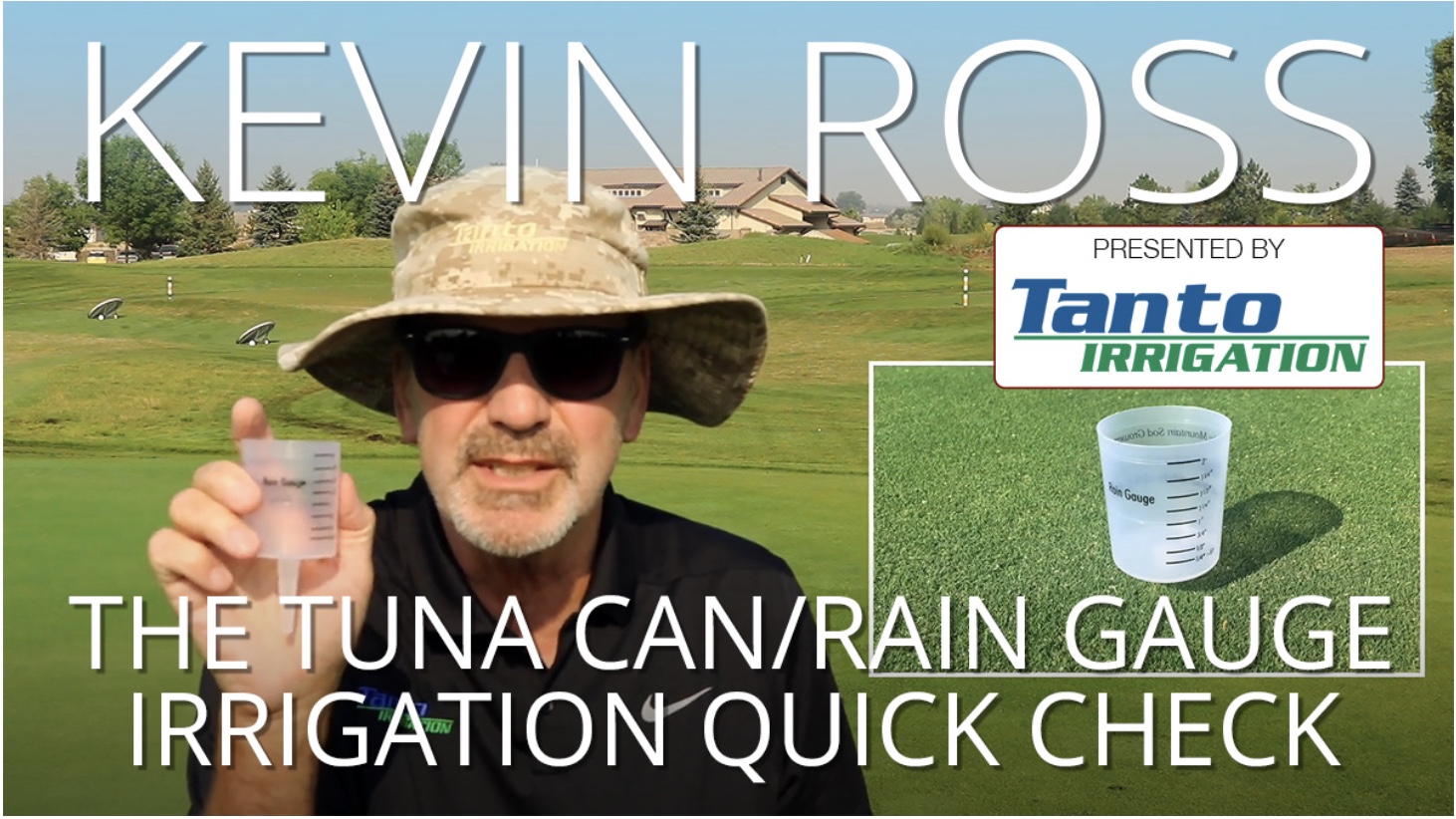
In my latest ONCOURSETurf video production for TurfNet.com I discuss how to perform an irrigation quick check. This is a very easy and effective method for quickly determining problems with sprinkler heads. It also can give a general idea of precipitation rate accuracy. VIEW HERE As always, thanks to my supporting sponsor www.tantoirrigation.com and thanks for watching! 


Sunday, June 14, 2020

TurfNet TV - Latest Video is Live

In my latest ONCOURSETurf video production for TurfNet.com I discuss protecting yourself from the sun. With all the additional health and safety measures for COVID-19, it's important not to forget sun protection. Take a look HERE. As always, thanks to my supporting sponsor www.tantoirrigation.com and thanks for watching!


Tuesday, April 14, 2020

TurfNet TV - Latest Video is Live...

In my latest ONCOURSETurf video production for TurfNet.com I discuss a vole damage recovery technique I used while I was a superintendent in the high mountains of Colorado. This technique is different than normal thinking, but it works exceptionally well. Take a look HERE As always, thanks to my supporting sponsor www.tantoirrigation.com and thanks for watching!


Sunday, February 23, 2020

Great Podcast...

This is a must listen podcast. Some really great information and thought provoking theories. Frank and Karl do a wonderful job with this. Take a listen HERE 


Saturday, February 15, 2020

TurfNet TV - Latest Video is Live...

In my latest ONCOURSETurf video production for TurfNet.com I discuss a sod holding and grow technique I developed while I was a superintendent in the high mountains of Colorado. This technique allows sod to root and establish at incredibly fast rates. Take a look HERE As always, thanks to my supporting sponsor www.tantoirrigation.com and thanks for watching!


Sunday, February 2, 2020

TurfNet TV - Latest Video is Live...

In my latest ONCOURSETurf video production for TurfNet.com I discuss an aerification technique I developed for sand based system greens. This technique helps eliminate the surface softness, which occurs during the aerification process to the green surface. To view this video, please click HERE As always, thanks to my supporting sponsor www.tantoirrigation.com and thanks for watching!


Thursday, December 19, 2019

TurfNet TV - Latest Video is Live...

In my latest ONCOURSETurf video production for TurfNet.com I discuss cart path curbing. A few years back, I was involved with a complete cart path construction project and I decided to do an interesting thing when it came to curbing selection. I never really liked the "standard 4-inch curb", so I discussed a smaller curb with our contractor, DHR Golf Construction, and they informed me of a project at the Olympic Club in San Francisco, where they used 2" curb. I must admit, I loved the thought of that. So, when I wrote the specs for the project, I decided to use 2" curbing in many areas throughout the course. It was a big success! To view this video, please click HERE As always, thanks to my supporting sponsor www.tantoirrigation.com and thanks for watching.


Saturday, November 23, 2019

Winter Injury on Golf Greens...


Recently, I came across this article I wrote in 2006. Even though it has some age, there still is some pertinent information concerning winter injury to turfgrass systems.

The cancer of turf (Turfgrass maintenance)

Although more is known about winter damage than in years past, there’s no guarantee turfgrass will survive the season unscathed.
September 2006 - Kevin J. Ross, ONCOURSETurf, LLC

One of the most difficult times for a golf course superintendent in Northern regions of the country is that anxious period in the spring when turfgrass conditions reveal how well the turf came through the winter.
As springtime approaches, superintendents are faced with difficult decisions concerning the “when’s,” “if’s” and “how’s” of ice and snow removal, free water removal, green cover use and many other decisions that might dictate how well the golf season starts.


When a course suffers severe winterkill, income suffers, reputation suffers, and most of all, superintendents suffer. Sometimes they get pink slips. Although the affected areas are eventually fixed or will recover, winter damage truly can be the cancer of turf.
Today’s terminology
Many individuals use the term “winter damage,” which covers various mechanisms of turfgrass damage. Basically, winter damage is defined as any injury that occurs during the winter. Winter damage can be inflicted by winter turfgrass fungi (snow molds and cool-season pythiums), crown hydration/dehydration, ice encasement damage (anoxia), direct low-temperature kill and desiccation. Of these, only true winter diseases and desiccation are understood, while crown hydration/dehydration and ice cover damage still aren’t completely understood. Crown hydration and ice damage have many questions associated with the “when’s” and “why’s.” Why this type of injury occurs is partly understood. 
In contrast, when it happens is the question to which no one really knows an answer. That’s what makes winter damage so difficult to combat. Some years, superintendents remove snow and ice from their greens, and the resulting turf conditions are perfect. The following year, the same blueprint is followed, and the results are far different with major turf damage.

How it happens
The mechanisms that cause crown hydration (also known as freeze injury) are thought to occur when hydrated plants become subject to rapid temperature decreases. Crown hydration – or dehydration, which is more accurate – happens from inside the plant tissue (intracellular) and from outside the plant tissue (extracellular). Crown dehydration from an intracellular nature is believed to happen when the water around the cells inside the plant suddenly freezes. This draws the water out of the cell, causing dehydration and results in the death of the plant. This is the type of injury that’s widely believed to cause most turf damage during the winter.
There’s certain debate about when this actually happens during the winter. James Ross, a researcher at the Prairie Turfgrass Research Centre in Olds, Alberta, believes the plant must break dormancy and begin to hydrate before the freezing process. Ross believes the transition from winter to spring is the most critical for damage to occur because of plant dehardening.
“Generally, when the plant begins to break dormancy, it takes on water, which hydrates the crowns and reduces the simple sugars that protect the crown through the winter and make it much more susceptible,” he says. “Others believe this can happen anytime during the winter, when some of the wacky weather takes place.”
Extracellular crown dehydration happens similarly, except it’s believed that ice forms outside the plant and pulls water out of the plant by osmosis. This results in a dehydration of the plant and might result in the death of the plant.
For years, winter damage (such as true ice encasement damage) has been associated with a gas build-up that occurs just under the ice surface. Under prolonged ice cover, oxygen is depleted from the plant, which is still under very low levels of respiration and microbe activity. This results in an accumulation of toxic gases that might cause the death of the plant. Recently, it’s been debated whether or not ice encasement damage is a major cause of turf damage. 
Superintendents also have been taught the 60/90-day rule for many years. This rule states that Poa annua can survive under ice cover for as long as 60 days, while bentgrass can survive as long as 90 days. This rule is based on 40-year-old research and is being revisited.

Cold tolerance
So, what have the industry learned to date? There seems to be one factor, although not completely understood, which might have the greatest influence on turfgrass overwintering. Plant hardening, or hardiness, can be classified as the antifreeze for turf and might be one of the most influential mechanisms determining winter survival. 
This process begins in the late summer and continues into the early winter. The plant goes through the hardening stage by internally adjusting to cold temperatures and by storing carbohydrates. During this period, moisture content decreases in the plant, leaving it with a higher sugar content. This higher sugar (antifreeze) content allows the plant to survive the freezing process better. 
It’s believed one of the major differences in winter survival between creeping bentgrasses and Poa annua is their ability to harden and deharden differently. To begin with, bentgrass has the ability to reach a much lower level of cold hardiness than Poa annua. The internal plant mechanisms of bentgrass allow it to harden off at a much lower percentage of moisture content in the crown tissues than Poa annua
An additional problem with Poa annua is it tends to deharden much faster than creeping bentgrass during the transition from winter to spring. This makes Poa annuamore vulnerable to freeze-type damage. 
In a two-year study conducted at the Prairie Turfgrass Research Centre, it was determined that in mid-March, Poa annua’s cold tolerance had dropped to 8.6 degrees Fahrenheit while the creeping bentgrass was cold hardy to -20.2 degrees Fahrenheit (Tompkins, 2000). The same study also found that both grass species eventually had the same cold tolerance by mid-April. These findings lend credence to the notion that most damage occurs during late winter through early spring, when dehardening occurs.
The best line of defense for preventing damage might be a combination of practices that all increase turfgrass health. Raising the cutting height and proper fertilization timing might be the two most important cultural practices. Both will help produce and store carbohydrates in the plant, which will increase the “antifreeze effect.” Another method of defense that’s often overlooked is to try to prolong cold-temperature hardiness by protecting turf with increasing snowcover or the use of covers. However, this can be tricky.

Hard to pinpoint
Many people in the industry have believed that if you have bentgrass versus Poa annua, there’s no need to worry about winter damage because of bentgrass’ greater cold tolerance. Well, we certainly know this isn’t always true. For example, Gerry White, former golf course superintendent of Sebago Lakes Resort’s 18-hole championship golf course in Casco, Maine, was quite surprised to find damage – for the first time ever – to his 10-year-old Poa-free Providence greens one April.
“In the 10 years since the course has been built, we had never had any damage to the greens,” White says. “They had been perfect every year. Suddenly one year, bang! I get hit pretty hard and lost almost all of my 16th green.”
The explanation? White has none, but he theorizes:
“We did have a crazy winter weatherwise, but every winter seems to be crazy,” he says.
So why this one year? No one really knows for sure. When turfgrass suffers winter damage, superintendents and those from the world of academia can only theorize what transpired to result in turf loss. That’s what makes this issue so difficult. If you don’t really know how it was caused, then it’s difficult to find a solution.
Finding a solution, if there is one, can only be accomplished by years of superintendents’ experiences and university research. John Roberts, Ph.D., from the University of New Hampshire, has been looking at winter damage for about 20 years and still hasn’t found the miracle cure. Other universities also are conducting work concerning winter damage. This includes research by Dave Minner, Ph.D., and Nick Christians, Ph.D., from Iowa State University and Darrell Tompkins and James Ross of the Prairie Turfgrass Research Centre.
Although winter damage is still a difficult phenomenon to understand, we certainly know more now than in years past. However, the knowledge that we’ve gained doesn’t ensure winter turfgrass survival. Many superintendents have headed into the winter preparing and conditioning the turf the best they can only to get nailed the following spring with winter damage. That’s why many believe winterkill is truly the cancer of turfgrass. 

Friday, November 22, 2019

TurfNet TV - Latest Video is Live.....

In my latest ONCOURSETurf video production for TurfNet.com I discuss marking "water release points" and "surface drainage patterns" that can help in the battle against winter injury on golf greens. I developed and used this technique for many years during my superintendent career and it was extremely helpful. To view the video, please click HERE As always, thanks to my supporting sponsor www.tantoirrigation.com and thanks for watching. 


Thursday, October 10, 2019

TurfNet TV - Latest Video is Live...

In my latest ONCOURSETurf video production for TurfNet.com I discuss a unique tool I came across to help with spray head maintenance. Spray heads, (pop ups) are becoming the norm for bunker surrounds. Keeping the surrounds in great shape will increase the longevity of the bunker itself. This tool is simple and easy to use. It can certainly be a big help with the maintenance of those bunker spray zones. To view the video click HERE As always, thanks to my supporting sponsor www.tantoirrigation.com


Sunday, September 22, 2019

TurfNet TV....Latest Video is Live

In my latest ONCOURSETurf video production for TurfNet.com I discuss a photo/video tip I learned years ago that has helped me get better photos and video for many years. It's simple and easy to do and the results can be great. It involves just getting up off of ground level for that great shot. To view the video click HERE As always, thanks to my supporting sponsor www.tantoirrigation.com


Saturday, August 31, 2019

TurfNet TV...Latest Video is Live

In my latest ONCOURSETurf video production for TurfNet.com I highlight an idea I picked up while on the agronomic team at Medinah Country Club setting up for the BMW Championships. This idea solves a unique problem while rolling greens and being unable to see your previous pass line. The use of simple snow stakes as guides makes it much easier to get rolling perfect. To view the video click HERE As always, thanks to my supporting sponsor www.tantoirrigation.com


Monday, July 15, 2019

TurfNet TV....Latest Video is Live...

My latest ONCOURSETurf video production for TurfNet.com is live. In this video I discuss a tool I made many years ago that can help with course set-up plugs. I show how this tool can help lower plugs that aren't level enough on the green surface. Whether it's just minor or more severe, this tool can help. View HERE. As always, thanks to my supporting sponsor, Tanto Irrigation.


Saturday, July 6, 2019

TurfNet TV - Latest Video is Live...

My latest ONCOURSETurf video production for TurfNet.com is live. In this video, Jordan McCormick, superintendent at Mariana Butte Golf Course in Loveland, Colorado shares his Custom Tool Roof Rack idea with me. A great idea, take a look, view HERE. Thanks for watching and enjoy!


Monday, June 24, 2019

TurfNet TV - Latest Video is Live.......

My latest video for TurfNet.com is live. This video is a follow-up to my previous video, the first ONCOURSE Turf Quiz. In this video I give the answers to the Turf Quiz. Check it out and see how you did. The quiz was a collection of just some of the issues I've seen in my travels over the past couple of years. Hope you had fun with it, because that's what it's all about. View HERE. As always, thanks to my supporting sponsor, Tanto Irrigation.